Preclinical Interpretation of Oral Urolithin-A Against Respiratory Disease Among Calves: Unlocking The "Gut-Lung Axis"
DOI:
https://doi.org/10.71336/ijvar.699Keywords:
Calves, gut-lung axis, respiratory disease, urolithin-aAbstract
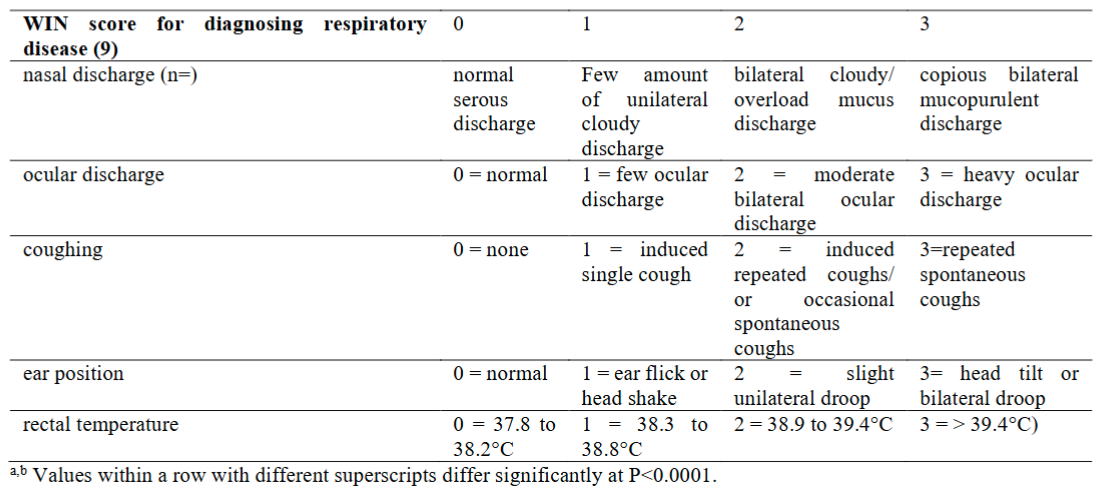
Pomegranate, as a plant, has long been known for its rich content of ellagitannins. Ellagitannins are completely hydrolyzed to ellagic acid in the intestine, which then gives rise to urolithins. This natural compound may support pulmonary system health as a feed additive, not a pharmacological agent. The aim of the present study was to describe the efficacy of urolithin-a against 17 Holstein calves with respiratory disease. Written owner consent and ethical guidelines report were considered available. No etiological investigation was conducted (outside the purpose of this study, as it was a preclinical, not clinical study). With the support of 3 veterinary experts, respiratory disease among calves was diagnosed based on the University of Wisconsin Calf Health Scoring Schedule (WIN score). Urolithin-a compound was administered perorally to diseased calves at 3 mg/kg for 10 consecutive days. No adverse effects were observed during feed additive administration. WIN scores were investigated before (day 0) and after treatment (day 10). Mean (8.24 vs. 1.82) and median (8.00 vs. 2.00) WIN scores were decreased in association with urolithin-a treatment before and after treatment, respectively (p<0.0001). In this preclinical setting, it would not be unfair to suggest that urolithin-a should help in the regression of respiratory disease among the enrolled calves. This nutraceutical administered via the gastrointestinal route was able to reverse respiratory signs indicating the secrets of the ‘gut-lung axis’ in this field study. The results obtained should be able to change treatment protocols.
References
Alic Ural D, Ural K. 2023. Zonulin as a Preliminary Biomarker of Lung Permeability Among Diseased Calves: Cohort Study. Egyptian Journal of Veterinary Sciences, 54(4), 601-607. DOI: https://doi.org/10.21608/ejvs.2023.196708.1450
Alic Ural D, Ural K, Paşa S, Gültekin M, Erdoğan H, Erdoğan S, Balıkçı C, Kızılkanat İ. 2025. Investigation Of The Effectiveness Of Urolithin-A On Fecal Scores In Calves With Non-Infectious Diarrhea. Current Perspectives on Health Sciences, 6(1), 39-46 DOI: https://doi.org/10.58208/cphs.1607670
Aviram M, Dornfeld L, Rosenblat M, Volkova N, Kaplan M, Coleman R, Hayek T, Presser D, Fuhrman B. 2000. Pomegranate juice consumption reduces oxidative stress, atherogenic modifications to LDL, and platelet aggregation: studies in humans and in atherosclerotic apolipoprotein E–deficient mice. The American Journal of Clinical Nutrition, 71(5), 1062-1076. DOI: https://doi.org/10.1093/ajcn/71.5.1062
Beltrán D, Romo-Vaquero M, Espín JC, Tomás-Barberán FA, Selma MV. 2018. Ellagibacter isourolithinifaciens gen. nov., sp. nov., a new member of the family Eggerthellaceae, isolated from human gut. International Journal of Systematic and Evolutionary Microbiology, 68(5), 1707-1712. DOI: https://doi.org/10.1099/ijsem.0.002735
Cao X, Wan H, Wan H. 2022. Urolithin A induces protective autophagy to alleviate inflammation, oxidative stress, and endoplasmic reticulum stress in pediatric pneumonia. Allergologia et Immunopathologia, 50(6), 147-153. DOI: https://doi.org/10.15586/aei.v50i6.743
Cerdá B, Espín JC, Parra S, Martínez P, Tomás-Barberán FA. 2004. The potent in vitro antioxidant ellagitannins from pomegranate juice are metabolised into bioavailable but poor antioxidant hydroxy–6H–dibenzopyran–6–one derivatives by the colonic microflora of healthy humans. European Journal Of Nutrition, 43, 205-220. DOI: https://doi.org/10.1007/s00394-004-0461-7
Cerdá B, Tomás-Barberán FA, Espín JC. 2005. Metabolism of antioxidant and chemopreventive ellagitannins from strawberries, raspberries, walnuts, and oak-aged wine in humans: identification of biomarkers and individual variability. Journal of Agricultural and Food Chemistry, 53(2), 227-235. DOI: https://doi.org/10.1021/jf049144d
Cortés‐Martín A, Selma MV, Tomás‐Barberán FA, González‐Sarrías A, Espín JC. 2020. Where to look into the puzzle of polyphenols and health? The postbiotics and gut microbiota associated with human metabotypes. Molecular Nutrition & Food Research, 64(9), 1900952. DOI: https://doi.org/10.1002/mnfr.201900952
Espín JC, Larrosa M, García-Conesa MT, Tomás-Barberán F. 2013. Biological significance of urolithins, the gut microbial ellagic acid‐derived metabolites: the evidence so far. Evidence‐Based Complementary and Alternative Medicine, 2013(1), 270418. DOI: https://doi.org/10.1155/2013/270418
Fukuda T, Ito H, Yoshida T. 2003. Antioxidative polyphenols from walnuts (Juglans regia L.). Phytochemistry, 63(7), 795-801. DOI: https://doi.org/10.1016/S0031-9422(03)00333-9
Gaya P, Peirotén Á, Medina M, Álvarez I, Landete JM. 2018. Bifidobacterium pseudocatenulatum INIA P815: The first bacterium able to produce urolithins A and B from ellagic acid. Journal of Functional Foods, 45, 95-99. DOI: https://doi.org/10.1016/j.jff.2018.03.040
Gil MI, Tomás-Barberán FA, Hess-Pierce B, Holcroft DM, Kader AA. 2000. Antioxidant activity of pomegranate juice and its relationship with phenolic composition and processing. Journal of Agricultural and Food Chemistry, 48(10), 4581-4589. DOI: https://doi.org/10.1021/jf000404a
González-Barrio R, Truchado P, García-Villalba R, Hervás G, Frutos P, Espín JC, Tomás-Barberán FA. 2012. Metabolism of oak leaf ellagitannins and urolithin production in beef cattle. Journal of Agricultural and Food Chemistry, 60(12), 3068-3077. DOI: https://doi.org/10.1021/jf300718k
González‐Sarrías A, Giménez‐Bastida JA, García‐Conesa MT, Gómez‐Sánchez MB, García‐Talavera NV, Gil‐Izquierdo A, Sánchez-Alvarez C, Fontana-Compiano LO, Morga-Egea JP, Pastor-Quirante FA, Martínez-Díaz F, Tomás-Barberán FA, Espín JC. 2010. Occurrence of urolithins, gut microbiota ellagic acid metabolites and proliferation markers expression response in the human prostate gland upon consumption of walnuts and pomegranate juice. Molecular Nutrition & Food Research, 54(3), 311-322. DOI: https://doi.org/10.1002/mnfr.200900152
He X, Wu Z, Jiang J, Xu W, Yuan A, Liao F, Ding S, Pu J. 2024. Urolithin a protects against hypoxia-induced pulmonary hypertension by inhibiting pulmonary arterial smooth muscle cell pyroptosis via AMPK/NF-κB/NLRP3 signaling. International Journal of Molecular Sciences, 25(15), 8246. DOI: https://doi.org/10.3390/ijms25158246
Heber D. 2008. Multitargeted therapy of cancer by ellagitannins. Cancer Letters, 269(2), 262-268. DOI: https://doi.org/10.1016/j.canlet.2008.03.043
Huang JR, Zhang MH, Chen YJ, Sun YL, Gao ZM, Li ZJ, Zhang GP, Qin XY, Dai XY, Yu XY, Wu XQ. 2023. Urolithin A ameliorates obesity-induced metabolic cardiomyopathy in mice via mitophagy activation. Acta Pharmacologica Sinica, 44(2), 321-331. DOI: https://doi.org/10.1038/s41401-022-00919-1
Jaureguiberry M, Rearte R, Marconi MJ, Giuliodori MJ, Madoz LV, Pinedo FA, de la Sota RL. 2023. A simplified scoring system for the diagnosis of diarrhea and respiratory diseases in dairy calves. The Canadian Veterinary Journal, 64(6), 553-557.
Jiao P, Wang Y, Ren G, Chu D, Li Y, Yang Y, Sang T. 2024. Urolithin A exerts a protective effect on lipopolysaccharide-induced acute lung injury by regulating HMGB1-mediated MAPK and NF-κB signaling pathways. Naunyn-Schmiedeberg's Archives of Pharmacology, 397(8), 5765-5777. DOI: https://doi.org/10.1007/s00210-024-02977-0
Larrosa M, Tomás-Barberán FA, Espín JC. 2006. The dietary hydrolysable tannin punicalagin releases ellagic acid that induces apoptosis in human colon adenocarcinoma Caco-2 cells by using the mitochondrial pathway. The Journal of Nutritional Biochemistry, 17(9), 611-625. DOI: https://doi.org/10.1016/j.jnutbio.2005.09.004
Lee HJ, Jung YH, Choi GE, Kim JS, Chae CW, Lim JR, Kim SY, Yoon JH, Cho JH, Lee SJ, Han HJ. 2021. Urolithin A suppresses high glucose-induced neuronal amyloidogenesis by modulating TGM2-dependent ER-mitochondria contacts and calcium homeostasis. Cell Death & Differentiation, 28(1), 184-202. DOI: https://doi.org/10.1038/s41418-020-0593-1
Lou L, Wang M, He J, Yang S, Meng F, Wang S, Jin X, Cai C. 2023. Urolithin A (UA) attenuates ferroptosis in LPS-induced acute lung injury in mice by upregulating Keap1-Nrf2/HO-1 signaling pathway. Frontiers in Pharmacology, 14, 1067402. DOI: https://doi.org/10.3389/fphar.2023.1067402
Luan P, D’Amico D, Andreux PA, Laurila PP, Wohlwend M, Li H, de Lima TI, Place N, Rinsch C, Zanou N, Auwerx J. 2021. Urolithin A improves muscle function by inducing mitophagy in muscular dystrophy. Science Translational Medicine, 13(588), eabb0319. DOI: https://doi.org/10.1126/scitranslmed.abb0319
Makkar HP, Singh B, Dawra RK. 1988. Effect of tannin-rich leaves of oak (Quercus incana) on various microbial enzyme activities of the bovine rumen. British Journal of Nutrition, 60(2), 287-296. DOI: https://doi.org/10.1079/BJN19880100
Salminen JP, Roslin T, Karonen M, Sinkkonen J, Pihlaja K, Pulkkinen P. 2004. Seasonal variation in the content of hydrolyzable tannins, flavonoid glycosides, and proanthocyanidins in oak leaves. Journal of Chemical Ecology, 30, 1693-1711. DOI: https://doi.org/10.1023/B:JOEC.0000042396.40756.b7
Selma MV, Beltrán D, Luna MC, Romo-Vaquero M, García-Villalba R, Mira A, Espin JC, Tomás-Barberán FA. 2017. Isolation of human intestinal bacteria capable of producing the bioactive metabolite isourolithin a from ellagic acid. Frontiers in Microbiology, 8, 1521. DOI: https://doi.org/10.3389/fmicb.2017.01521
Shabtay A, Eitam H, Tadmor Y, Orlov A, Meir A, Weinberg P, Chen Y, Brosh A, Izhaki I, Kerem Z. 2008. Nutritive and antioxidative potential of fresh and stored pomegranate industrial byproduct as a novel beef cattle feed. Journal of Agricultural and Food Chemistry, 56(21), 10063-10070. DOI: https://doi.org/10.1021/jf8016095
Smith AH, Zoetendal E, Mackie RI. 2005. Bacterial mechanisms to overcome inhibitory effects of dietary tannins. Microbial Ecology, 50, 197-205. DOI: https://doi.org/10.1007/s00248-004-0180-x
Tao H, Li W, Zhang W, Yang C, Zhang C, Liang X, Yin J, Bai J, Ge G, Zhang H, Yang X, Li H, Xu Y, Hao Y, Liu Y, Geng D. 2021. Urolithin A suppresses RANKL-induced osteoclastogenesis and postmenopausal osteoporosis by, suppresses inflammation and downstream NF-κB activated pyroptosis pathways. Pharmacological Research, 174, 105967. DOI: https://doi.org/10.1016/j.phrs.2021.105967
Vini R, Jaikumar VS, Remadevi V, Ravindran S, Azeez JM, Sasikumar A, Sundaram S, Sreeja S. 2023. Urolithin A: A promising selective estrogen receptor modulator and 27‐hydroxycholesterol attenuator in breast cancer. Phytotherapy Research, 37(10), 4504-4521. DOI: https://doi.org/10.1002/ptr.7919
Watanabe H, Kishino S, Kudoh M, Yamamoto H, Ogawa J. 2020. Evaluation of electron-transferring cofactor mediating enzyme systems involved in urolithin dehydroxylation in Gordonibacter urolithinfaciens DSM 27213. Journal of Bioscience and Bioengineering, 129(5), 552-557. DOI: https://doi.org/10.1016/j.jbiosc.2019.11.014
Zhang X, Fang Y, Yang G, Hou X, Hai Y, Xia M, He F, Zhao Y, Liu S. 2022. Isolation and characterization of a novel human intestinal Enterococcus faecium FUA027 capable of producing urolithin A from ellagic acid. Frontiers in Nutrition, 9, 1039697. DOI: https://doi.org/10.3389/fnut.2022.1039697
Zhang Y, Aisker G, Dong H, Halemahebai G, Zhang Y, Tian L. 2021. Urolithin A suppresses glucolipotoxicity-induced ER stress and TXNIP/NLRP3/IL-1β inflammation signal in pancreatic β cells by regulating AMPK and autophagy. Phytomedicine, 93, 153741. DOI: https://doi.org/10.1016/j.phymed.2021.153741
Downloads
Published
How to Cite
Issue
Section
License
Copyright (c) 2026 International Journal of Veterinary and Animal Research (IJVAR)

This work is licensed under a Creative Commons Attribution-NonCommercial-NoDerivatives 4.0 International License.